




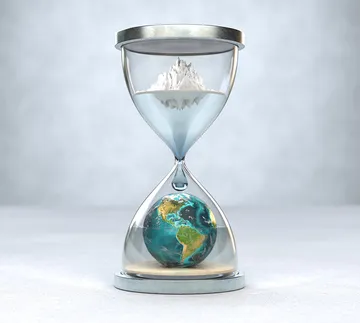
In addition to reducing GHG emissions through Carbon offsets, cutting-edge technologies, or other methods, the Carbon Markets Club was founded as a place where organizations and individuals can show their commitment to saving the planet. The club functions as a fully integrated carbon credit trading market, allowing any individual or organization to engage in carbon credit trading. These activities will also help prepare Thai industries for a new tax barrier in the form of a carbon tax.

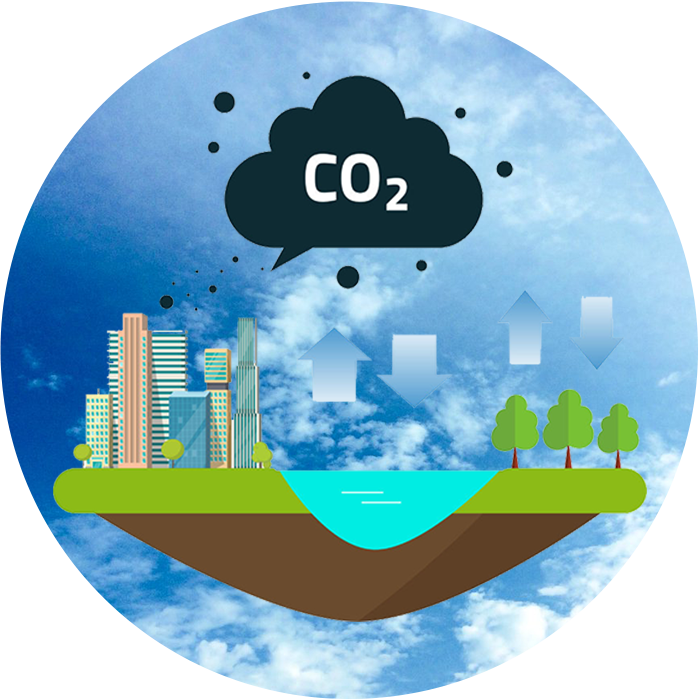
The Paris Climate Agreement was approved by 197 nations, including Thailand, at COP21 in 2015 and agreed to hold the increase in global average temperatures well -below 2 °C and pursue efforts to limit the increase to 1.5 °C.
Presently, global temperatures have risen by 1 °C since pre -industrial levels. Holding warming to 1.5 °C could mean that 11 million fewer people are exposed to extreme heat, 61 million fewer people are exposed to drought and 10 million fewer people are exposed to rising sea level impacts1 compared to 2 °C warming. Governments and companies setting and achieving Net Zero targets will be key to limiting warming to 1.5 °C.
What does Net Zero mean? Ensuring protection of the environment by neutralizing all scope 1, 2 and 3 emissions from the business. In the absence of emissions reductions options businesses should consider investing in carbon offsets to balance out any residual emissions.
What is Carbon Offset
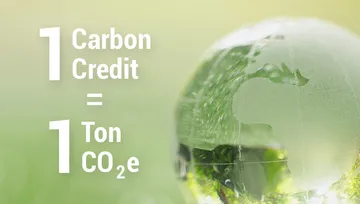
A carbon offset is a certificate representing the reduction of one metric ton (2,205 lbs) of carbon dioxide emissions, the principal cause of climate change. Economists recognize carbon markets as a way to increase climate ambition and lower GHG emission levels in the atmosphere by creating a financial incentive to curb emissions through the investment and funding in Carbon Capture and Reduction Technology and Energy Transition project.
The idea is, if one country pays for emissions to be cut or captured in a second country, for example by planting a forest or installing renewable energy facilities, it can count those reductions towards its own climate goals. The aim is that for every tonne of CO2 that is emitted somewhere, another tonne is captured elsewhere.
Countries can trade credits, which each represent one tonne of CO2, with each other in a global marketplace. Theoretically, this exchange should balance out and prevent an overall increase in emissions – provided all emissions from human activity are covered by the scheme.

The Earth’s rising temperature has become a global issue, and carbon credit trading is one of the ways business sectors can help deal with the problem. Carbon credit trading, or indirect tax payments, imposes additional expenses on certain organizations - especially heavy industries or companies that use fossil fuels. Income from carbon credit sales will be used for the development of the green economy and non-tariff barriers related to environmental and sustainability policy initiatives, such as the EU’s "European Green Deal," Singapore’s Green Plan, South Korea’s Green New Deal, and Japan’s Green Growth Strategy.
The Carbon Border Adjustment Mechanism (CBAM) equalizes the price of carbon between domestic products and imports. Its purpose is to establish pricing for certain carbon-intensive imported products crossing into EU nations, to ensure that the EU’s climate objectives are not undermined. Any industries that emit more carbon than those located in the EU would be subject to a carbon tax or the purchase of carbon credits. One example is Norway, where the carbon tax is currently around €80 per ton and will rise to €200 per ton by 2030.
These carbon policy initiatives and carbon taxes will significantly affect Thai exporters. They are a challenge that the entire Thailand economy must prepare for. Large industries must plan their production to meet Net Zero criteria, while medium-sized businesses may use carbon credit trading mechanisms to improve the potential to export their products internationally.
The Differences between Carbon Neutral vs. Net-Zero
- Carbon Neutral: This can be achieved by estimating one’s GHG emissions, acting to reduce them, then compensating (offsetting) unavoidable emissions with credible carbon credit. Sometimes used as a synonym of Climate Neutrality, and can be restricted to emissions of CO2
- Net-zero carbon emissions: Estimating one’s GHG, acting to reduce them, then compensating any remaining emissions by implementing projects that capture and store carbon on a long-term basis, or buying carbon credits generated from such projects. Sometimes used as a synonym of Net-zero emissions, and can be restricted to emissions of CO2
- Net-zero emissions: Estimating one’s GHG, acting to reduce them, then compensating any remaining emissions by implementing projects that capture and store carbon on a long-term basis, or buying carbon credit generated from such projects
- Climate positive or Carbon negative: to go beyond net-zero carbon emissions by absorbing more carbon from the atmosphere than what is emitted.

Greenhouse gas emissions, measured in tons of carbon dioxide equivalent (tCO2e), might vary greatly depending on the lifestyle of each individual. Alternative energy for sustainable living can help reduce greenhouse gas emissions by using renewable energy, electric cars, public transit, energy-saving electric devices, etc.
The Carbon Markets Club facilitates organizations and people who care about the environment and want to decrease their or their family’s carbon footprint to achieve carbon net-zero status. This can be achieved by purchasing carbon credits to offset greenhouse gas emissions from one's daily use through the Carbon Markets Club
The Carbon Markets Club was honored by Dr. Thon Thamrongnawasawat, a marine scholar with expertise in environmental conservation, who joined the club and purchased carbon credits to offset greenhouse gas emissions caused by his daily activities. It exemplifies how one can join the Carbon Markets Club and become a 'Net Zero Emissions Man'.
One starts by calculating their carbon footprint - caused by various activities throughout the year - via the Thai Carbon Footprint Calculator application by the Greenhouse Gas Management Organization (TGO). The app is divided into 3 sections: home energy use, commuting, and food. Once the amount of CO2 emitted throughout the year is known, one may set carbon reduction goals, such as 5-10% per year, making personal or family carbon reductions more objective and tangible.
Anyone can easily become a Net Zero Emissions Man (NZEM) and help save the world by reducing greenhouse gas emissions.
You can download the Thai Carbon Footprint Calculator application. Thai Carbon Footprint Calculator.
The Earth’s rising temperature has become a global issue, and carbon credit trading is one of the ways business sectors can help deal with the problem. Carbon credit trading, or indirect tax payments, imposes additional expenses on certain organizations - especially heavy industries or companies that use fossil fuels. Income from carbon credit sales will be used for the development of the green economy and non-tariff barriers related to environmental and sustainability policy initiatives, such as the EU’s "European Green Deal," Singapore’s Green Plan, South Korea’s Green New Deal, and Japan’s Green Growth Strategy.
The Carbon Border Adjustment Mechanism (CBAM) equalizes the price of carbon between domestic products and imports. Its purpose is to establish pricing for certain carbon-intensive imported products crossing into EU nations, to ensure that the EU’s climate objectives are not undermined. Any industries that emit more carbon than those located in the EU would be subject to a carbon tax or the purchase of carbon credits. One example is Norway, where the carbon tax is currently around €80 per ton and will rise to €200 per ton by 2030.
These carbon policy initiatives and carbon taxes will significantly affect Thai exporters. They are a challenge that the entire Thailand economy must prepare for. Large industries must plan their production to meet Net Zero criteria, while medium-sized businesses may use carbon credit trading mechanisms to improve the potential to export their products internationally.
The Differences between Carbon Neutral vs. Net-Zero
- Carbon Neutral: This can be achieved by estimating one’s GHG emissions, acting to reduce them, then compensating (offsetting) unavoidable emissions with credible carbon credit. Sometimes used as a synonym of Climate Neutrality, and can be restricted to emissions of CO2
- Net-zero carbon emissions: Estimating one’s GHG, acting to reduce them, then compensating any remaining emissions by implementing projects that capture and store carbon on a long-term basis, or buying carbon credits generated from such projects. Sometimes used as a synonym of Net-zero emissions, and can be restricted to emissions of CO2
- Net-zero emissions: Estimating one’s GHG, acting to reduce them, then compensating any remaining emissions by implementing projects that capture and store carbon on a long-term basis, or buying carbon credit generated from such projects
- Climate positive or Carbon negative: to go beyond net-zero carbon emissions by absorbing more carbon from the atmosphere than what is emitted.
Greenhouse gas emissions, measured in tons of carbon dioxide equivalent (tCO2e), might vary greatly depending on the lifestyle of each individual. Alternative energy for sustainable living can help reduce greenhouse gas emissions by using renewable energy, electric cars, public transit, energy-saving electric devices, etc.
The Carbon Markets Club facilitates organizations and people who care about the environment and want to decrease their or their family’s carbon footprint to achieve carbon net-zero status. This can be achieved by purchasing carbon credits to offset greenhouse gas emissions from one's daily use through the Carbon Markets Club
The Carbon Markets Club was honored by Dr. Thon Thamrongnawasawat, a marine scholar with expertise in environmental conservation, who joined the club and purchased carbon credits to offset greenhouse gas emissions caused by his daily activities. It exemplifies how one can join the Carbon Markets Club and become a 'Net Zero Emissions Man'.
One starts by calculating their carbon footprint - caused by various activities throughout the year - via the Thai Carbon Footprint Calculator application by the Greenhouse Gas Management Organization (TGO). The app is divided into 3 sections: home energy use, commuting, and food. Once the amount of CO2 emitted throughout the year is known, one may set carbon reduction goals, such as 5-10% per year, making personal or family carbon reductions more objective and tangible.
Anyone can easily become a Net Zero Emissions Man (NZEM) and help save the world by reducing greenhouse gas emissions.
You can download the Thai Carbon Footprint Calculator application. Thai Carbon Footprint Calculator.


COMING SOON
The Latest Carbon Credit Trading Statistics

| 536,360 tCO2e TVERs | 2,701,251 MWh RECs | Equivalent a 10-year-old tree planted 219,416,919 trees |